



I’ve met too many bears for one lifetime.
Frankly, one is too many.
If you’ve ever lived somewhere like Squamish, BC, you know the drill: Bears in your yard, bears on your hike, bears in your trash—bears, bears, bears.
And while they may not be as common in Kenora’s downtown as they were in Squamish, they’re far from rare in Northwestern Ontario.
They’re part of the landscape, sure. But that doesn’t mean we have to roll out the welcome mat. Bear encounters aren’t cute.
We’re not talking about Winnie the Pooh here.
So, whether you’re at home or out enjoying Kenora’s trails, here’s how to stay safe and keep your property bear-free.
(And for what to do and who to call when you see one, check out Johnathan’s post!)
Bear-Proofing Your Home
Here’s how to make your property less appealing to a hungry bear and avoid that bear encounter:
- Secure your garbage in bear-resistant bins or locked sheds.
- Put garbage out in the morning, not the night before.
- Remove bird feeders from spring to fall.
- Clean your BBQ after every use and store it inside if possible.
- Don’t leave pet food, compost, or fallen fruit outside.
- Teach your kids what to do if they see a bear: stay calm, back away slowly, and never run.

Hiking in Bear Country: Tips from Someone Who’s Had Too Many Bear Encounters
If you’re heading out on the trails around Kenora, here’s how to avoid turning your hike into a bear encounter story:
1. Make Noise
Bears don’t like surprises. So, if you want to avoid that bear encounter: talk, sing, clap, whatever it takes. If you’re hiking solo, consider a bear bell or stream Q104 or 89.5 the Lake out loud on your phone. Yes, silence is golden, but not in bear country.
2. Stay Alert
Scan the trail ahead, especially in dense brush or near berry patches. Look for signs like fresh scat, claw marks on trees, or overturned logs.
Think of it like nature’s social media, except the comments are written in bear tracks and instead of “likes” you just smell bear poop. Bear encounters aren’t typically tweeted out in advance, but you can stay safe by noticing the clues. If fresh scat is still steaming or full of berries, you’re probably not far behind the source.
Likewise, claw marks on trees aren’t just for show, they’re territorial signals or signs of climbing. Overturned logs and dug-up stumps mean a bear’s been foraging for insects or grubs. If you see these signs, slow down and make noise. You’re in their kitchen now, and they might not appreciate surprise guests.
Berry patches are bear magnets, especially in late summer and early fall. If you’re walking through one, assume you’re not alone. Bears will hunker down and feed for hours, and they’re not always easy to spot until you’re too close.
One of my bear encounters was my fault: I accidentally snuck up on him while he fed. Don’t be me. Stay vocal, stay visible, and don’t linger.
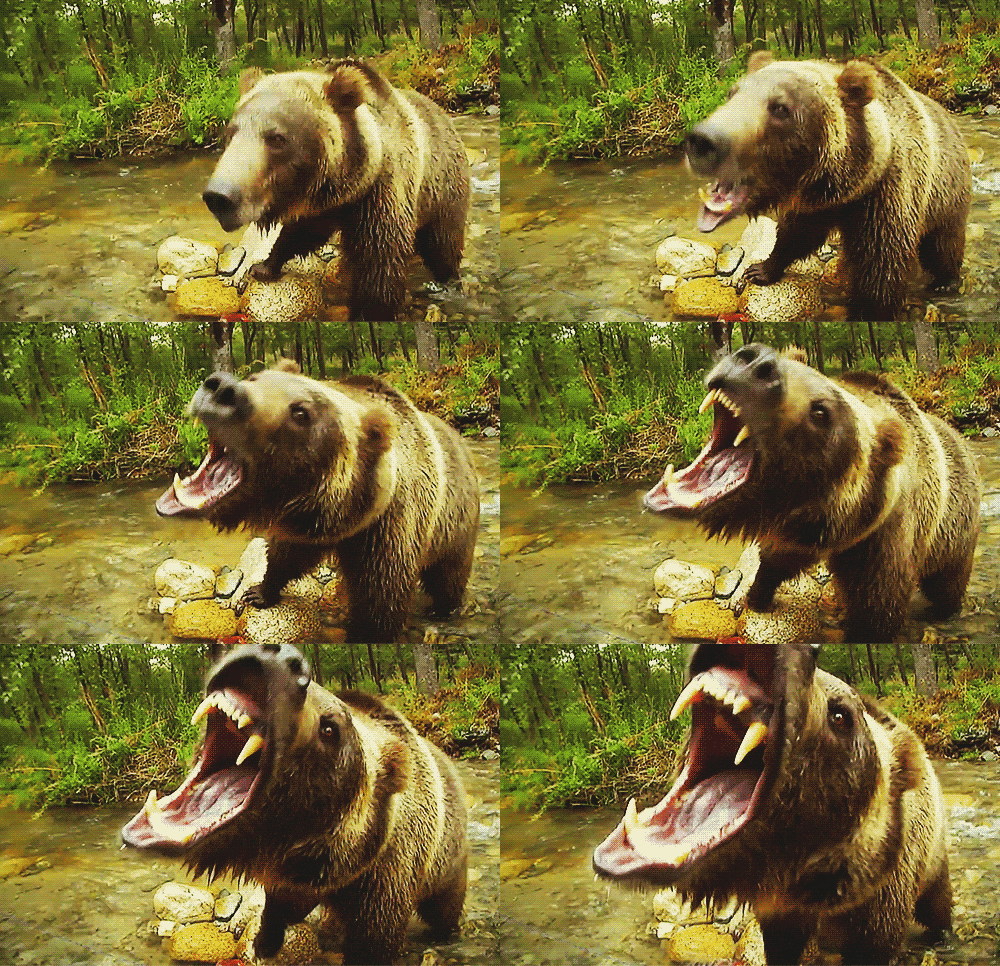
3. Leave the Snacks in Your Pack
The best way to avoid a bear encounter is by not walking around with granola bars in your pockets.
Keep food sealed and stored away. If you stop for a snack, clean up immediately. Bears have a sense of smell like a bloodhound. You might not notice the scent, but a bear will, and it’s not going to ask politely if you’re done with that.
If you’re stopping for a break, treat it like a pit stop in bear country. Eat quickly, pack up immediately, and double-check that nothing’s been dropped or left behind.
And don’t assume your backpack is a safe zone. If it smells like food, it is food to a bear. They’ve been known to tear through packs, tents, and even vehicles to get at a snack.
So, unless you want your gear shredded and your hike cut short, keep your food locked down and your pockets clean.
4. Carry Bear Spray and Know How to Use It
Bear spray isn’t just a prop. Keep it accessible (not buried in your backpack) and practice how to use it before you need it. Quick tip: it’s not like sunscreen. I’m sure this doesn’t need saying, but please, DO NOT SPRAY YOURSELF WITH BEAR SPRAY.
The active ingredient of bear spray is capsaicin. It’s the same stuff that makes hot peppers hot but dialed up to 11. It’ll deter a charging bear, but you don’t want that in your eyes, lungs, or anywhere near your skin.
If you’re carrying bear spray, treat it with the same respect you’d give any defensive tool. Know it, trust it, and don’t treat it like a novelty item.

5. Hike in Groups
Bear encounters rarely happen when you’re with people. Bears are less likely to approach a group. Plus, it’s just more fun—and safer—to hike with friends.
6. Avoid Dawn and Dusk
These are peak bear activity times and the most likely time you’ll experience a bear encounter. If you’re hitting the trail early or late, be extra cautious. That’s when they’re out foraging, moving between feeding spots, or just doing their bear business before the heat of the day sets in.
If you’re an early riser or a sunset hiker, you’re stepping into their shift.
7. Don’t Run
If you do encounter a bear, stay calm. Speak firmly, back away slowly, and never turn your back or run. You’re not outrunning a bear—trust me.
Bears can hit speeds of up to 50 km/h, and unless you’re Donovan Bailey with a head start and a downhill slope, you’re toast. Running triggers their chase instinct. Kind of like a dog, but with claws and a whole lot more muscle.
Instead, plant your feet, take a breath, and talk to the bear in a steady, confident voice. You’re trying to show it you’re human, not prey. Back away slowly, keeping your eyes on the bear without making direct eye contact. If it stands up, it’s probably just trying to get a better look, not gearing up to attack. If it huffs, pops its jaw, or sways side to side, that’s a warning. Keep backing off.
And if it charges? Most charges are bluff charges. Hold your ground. It’s the hardest thing you’ll ever do, but it might save your life.
Respect The Bear
Bears aren’t villains, but they’re not cuddly teddy bears either. They’re wild animals doing what wild animals do. They’re looking for food, protecting their space, and sometimes wandering into ours.
But with a little preparation and a lot of common sense, we can keep our homes and hikes safe. And we can keep our bear encounters to a minimum.