


The Nishnawbe Aski Nation is pleased with the federal government’s commitment to support communities impacted by the shortened winter road season.
“Last winter our Chiefs were forced to declare a state of emergency as unseasonably warm weather threatened the viability of winter roads, and our leaders are concerned that the same will happen this year. I agree with the Minister that this is an all-hands-on-deck moment, and I appreciate her willingness to sit at the table with us and act on these serious issues,” said Grand Chief Alvin Fiddler. “In addition to this funding, I am encouraged by the Minister’s commitment to develop a First Nations-led road agency.”
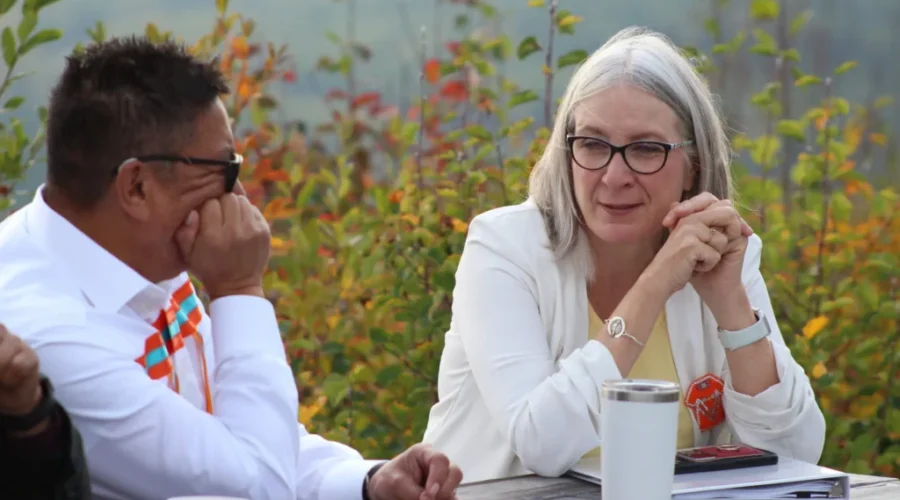
The announcement was made following a Winter Roads Roundtable held in Thunder Bay, which welcomed representatives from across NAN’s territory as well as other partners and stakeholders.
At the event Indigenous Services Minister Patty Hadju also committed an additional $20 million over four years, matching the provincial government’s funding for the construction of bridges and culverts.
“The Government of Ontario does provide much-needed funding to support the winter road network, but I am disappointed that provincial political leaders were not (at the roundtable),” added Fiddler. “We are still in a state of emergency. Many of the issues we are discussing require the province to be at the table. They are part of the ongoing discussions we need to have, and we expect their participation.”
According to NAN, climate change has impacted the road system making construction more challenging and dangerous.
“The warming climate has shortened the periods of consecutive freezing degree days needed for construction at the beginning of the winter road season and earlier breakup of winter roads,” explained NAN in a release. “Extreme weather events resulting in high snow and rainfall in early winter road season increases water levels and water movement speeds, resulting in slower freeze times of water crossings.
“The impacts of climate change have significantly shortened the winter road season, reducing it from an average of 77 days to as few as 28 days – or even less in some regions.”
The Winter Road Network consists of two all-season roads and eight winter road corridors.
There are also two all-season roads called Nungesser Road leading from Red Lake to Berens River, and Pickle Lake Road (NORT Road).
NORT provides access to Pickle Lake and Musselwhite Mine. Historically the road ended at Windigo Lake, but it now extends to Weagamow thanks to a new bridge.
Two additional winter road corridors connect communities further South.
More than 30 First Nation communities in Ontario are remote, with no year-round access to more southern communities.
Winter roads link these communities to the province’s highway network.


