


Trustees will remain in place, but the provincial government is moving ahead with changes it says will improve school board oversight and accountability.
It includes having Directors of Education become Chief Executive Officers and be responsible for the financial and management aspects of school boards.
Persons hired will be required to have business qualifications.
New legislation also intends to create new Chief Education Officers, appointed by the CEO, who would focus on student achievement.
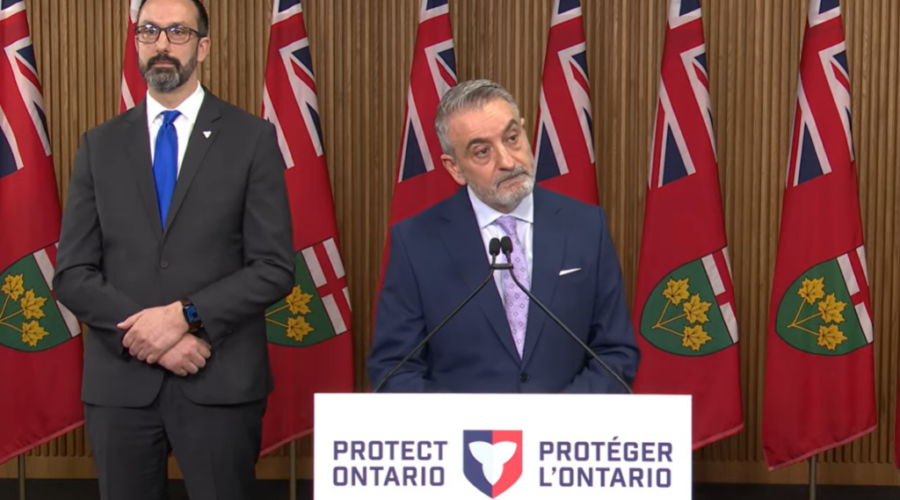
Education Minister Paul Calandra says it does not necessarily set up a new layer of administration.
“School boards across the province have a whole cadre of superintendents that they have right now,” says Calandra.
“The goal would be to identify one of those superintendents, existing superintendents who can become the chief educational officer. We’re not adding anybody.”
Calandra says directors of education currently perform both roles, and sees them transitioning to Chief Executive Officer for their boards.
School boards will be limited to having no more than 12 trustees, a change that only impacted the Toronto Public District School Board.
The appointment of First Nation and student trustees will not be affected.
“I wanted to ensure that we removed the distractions that come from trustees from the system,” says Calandra.
“So the new roles of a trustee will be significantly reduced from what it was before.”
CEOs will lead the development of budgets and refer matters to the Minister when they can not be resolved at the board table.
The Minister also has the final say on whether a CEO should be removed from their position.
Contract bargaining will also be handed over to the Council of Ontario Directors of Education, which will serve as the central employer bargaining agency for English public and English Catholic boards.
There will also be changes in the classroom.
Teachers will be required to use ministry-approved learning resources.
Exams will be mandatory for students in grades 9-12, removing exemptions that some schools granted.
Attendance will also make up 15% of a high school student’s final mark.
Calandra says absenteeism has been climbing since the pandemic and has caused a lot of challenges for teachers.
“The old system, the system that we’re hoping to replace if the bill is passed, 100 % of that mark by and large in some instances was based entirely on coursework,” says Calandra.
“Students did not need to participate. I think this is an important change. It absolutely reflects what teachers and high school teachers have told me.”