


If you’ve ever stood somewhere and felt the ground hum with history and stories, you’ll understand what it’s like to visit Kay‑Nah‑Chi‑Wah‑Nung, also known as the Manitou Mounds. This sacred site on the Rainy River in Northwestern Ontario is a National Historic Site; a place where time folds, and where you can feel thousands of years in the wind, in the long grass, in the river’s roar. You will be welcomed, learn, walk, eat, reflect, all in one day. Welcome to the “paddle” portion of Paddle & Plate; an exploration of Northwestern Ontario and all the experiences and adventures that await you across the region.
A Place of Long Rapids and Long Stories
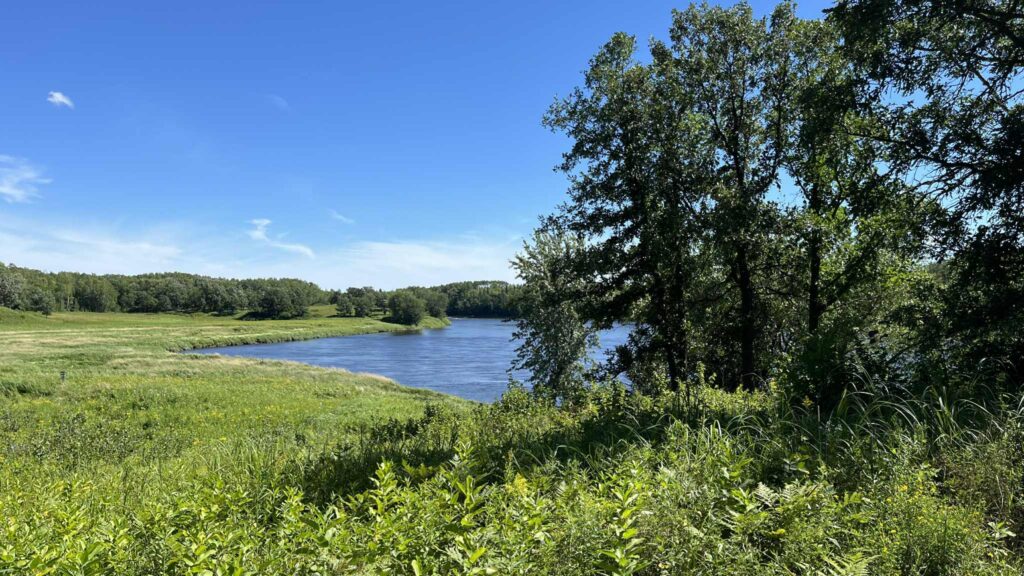
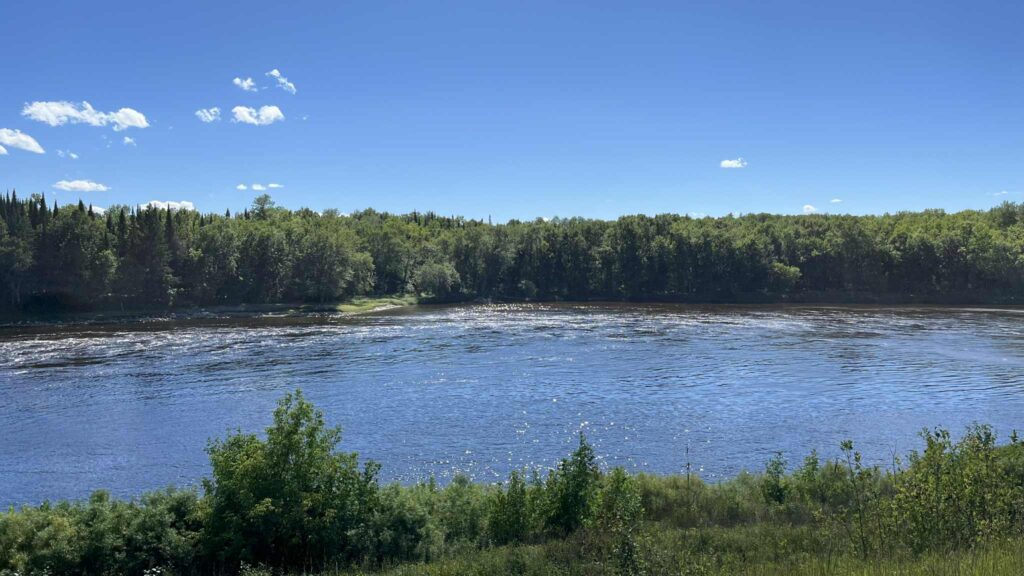
The name Kay‑Nah‑Chi‑Wah‑Nung means “the Place of the Long Rapids.” The moment you arrive at the banks of the Rainy River, you see, and hear, why: the water rushing, the rapids pulsing, the presence of the river as an old, living thing. For the Anishinaabe and many Indigenous peoples, this river (Manidoo Ziibi, Spirit River) has been a source of life: food, travel, connection, ceremony.
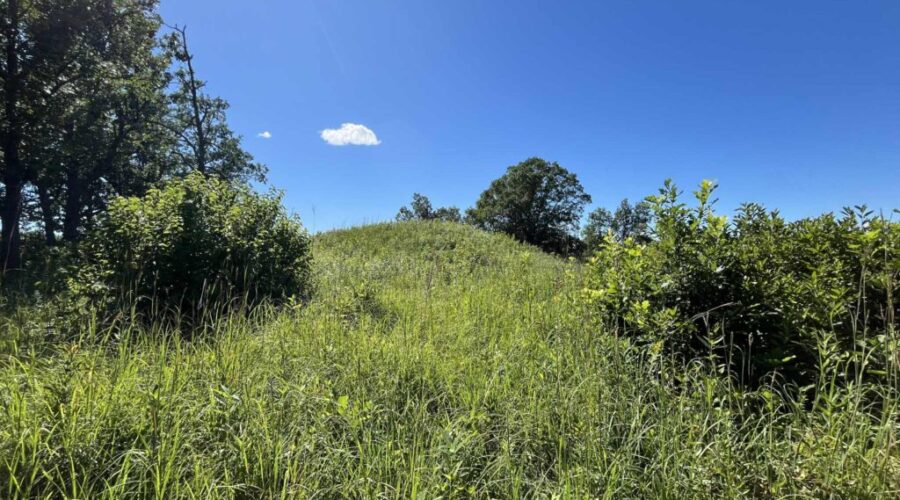
The mounds themselves are ancient burial sites, built by Indigenous Peoples who called this region home for over 8,000 years. The first mound builders here were from the Laurel Complex (about 2,300 years ago), and later the Blackduck and Selkirk groups continued the tradition of building mounds, each culture contributing its style, its pottery and artifacts, and its stories. These mounds are impressive, some rising as high a two‑storey building (7m), standing alongside the river, visible still today as monuments to people whose names we may never know.
Arriving at Kay‑Nah‑Chi‑Wah‑Nung
I visited with a group of five: my partner, her son, our two granddaughters, and me. From the moment we pulled in, the staff greeted us with warmth and genuine enthusiasm. They carried pride, respect, and a desire for others to understand. Right away, it was clear this was not just another “tourist stop.”
We opted for a guided tour, and honestly, I can’t emphasize enough how much richer that choice made the experience. The trails are beautiful on their own, but having someone who knows the land, its stories, its heartbreaks and triumphs, changes everything. It also made things more accessible: with kids, with someone who tires, or with mobility limits, the guide helps pace things, choose where to stop, what to focus on.
What We Saw: Tour Highlights & Sacred Moments
Our journey began inside the Visitor Centre, where the first thing that caught my eye was a basket for tobacco, or asemaa. In Anishinaabe culture, offering tobacco is a sacred practice, used to communicate with Elders or Knowledge Keepers, to show gratitude, or to ask for guidance. Starting the visit with this gesture set the tone: this was not just a place to look at, but a place to enter with respect.
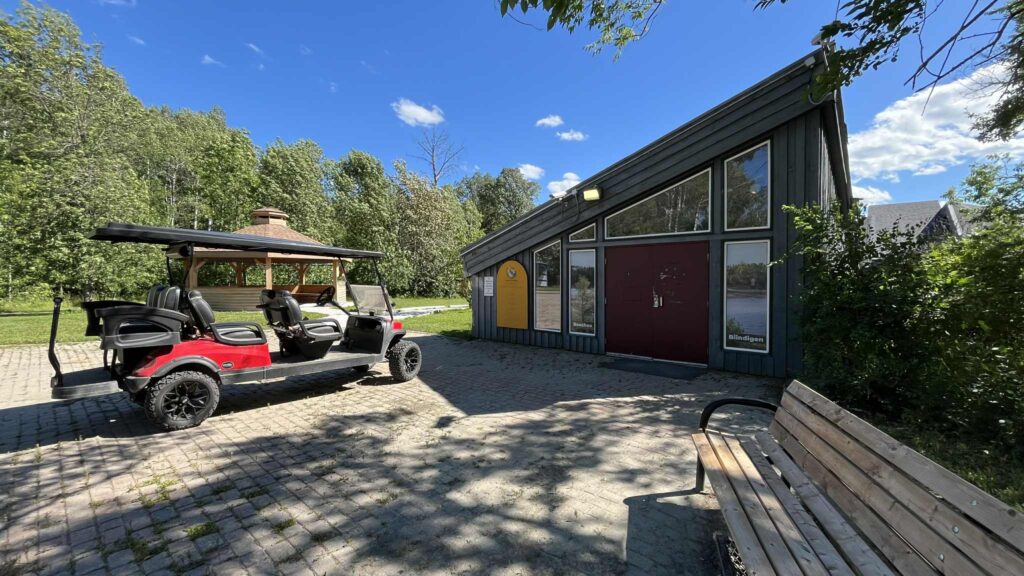
Walking further in, we descended a long hallway of stairs that led us deeper into the land and toward the front desk. To the left was something unexpected: a massive 4,000-gallon aquarium, home to native fish of the Rainy River. During our visit, it held a lively bass and nearly three foot long sturgeon, the first I had ever seen up close! The staff explained that this sturgeon, which can live for decades and hold immense cultural and ecological significance, are housed here temporarily before being released back into the river. Rainy River First Nations is deeply committed to protecting and reintroducing sturgeon populations, not just locally but in many places, as far away as Alabama. It was a reminder that the care of this land extends to the water and all life within it.
This is where we met our incredible guide, Shy-Leigh. Her family lineage is deeply entwined with the history of this place, and you can feel that connection in everything she says. She cares. She listens. She answers questions with a rich knowledge of the history of the site. She holds space between what is known, what is learned, and what is felt. She also recently began working in the site’s Archives & Collections, helping to protect artifacts, oral histories, and materials that carry memory. Knowing she isn’t just giving tours but helping preserve what’s sacred made her stories land differently. It turned the visit into a shared act of respect.
Inside the Visitor’s Centre you will find incredible exhibits that will provide you with a wealth of knowledge about the site and the history of the Anishinaabeg Peoples of the Treaty 3 Territory, a cute gift shop, and a restaurant called The Hungry Hall, which features a menu full of delectable offerings that have roots in Indigenous culture from the area, like wild rice burgers, fresh fish, and more! We had dinner after our tour and the meal was so incredible it warrants it’s own article – watch for that, coming soon!
Shy-Leigh led us back outside, where we climbed onto a large golf cart that would carry us along the trail. Our first stop was a burial site that had once held a church. Though the building is gone, grave markers remain, some belonging to settlers, others to Anishinaabe people who had converted to Christianity during the beginning of colonization in the area. Shy-Leigh pointed out a few markers, including that of a young girl, and as we stood there, it struck me how layered this land is with histories: faith, colonization, grief, and resilience.
From there, we continued to one of the 17 burial mounds on site, this one from the Blackduck era. It was here that Shy-Leigh began to explain how the mounds were constructed, how the remains of loved ones were carefully prepared and placed inside, and how the mounds themselves grew over time as generations were added. This was the first moment I felt overwhelming emotion: the weight of knowing many people rest here, ancestors whose lives and deaths were meaningful, whose stories are still being uncovered and honoured. It was impossible not to feel both sorrow and reverence.
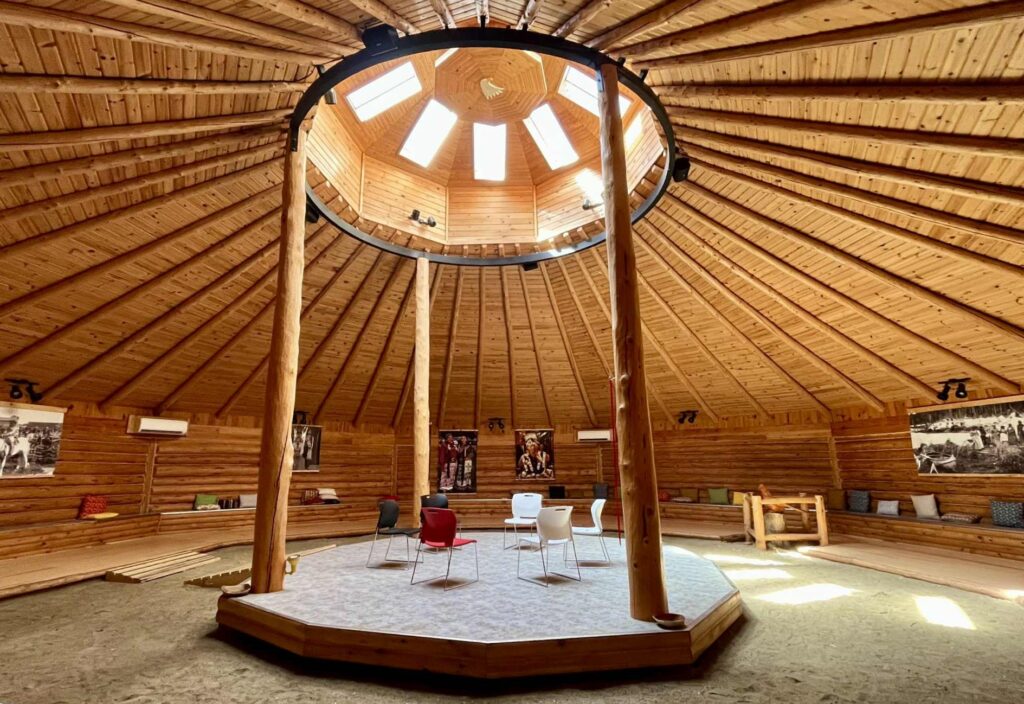
Our next stop was the roundhouse, a striking circular building made of beautiful cedar. While it is fairly new, it is built in keeping with cultural traditions and spiritual teachings. The round design reflects the Anishinaabe belief that circles represent balance and continuity.
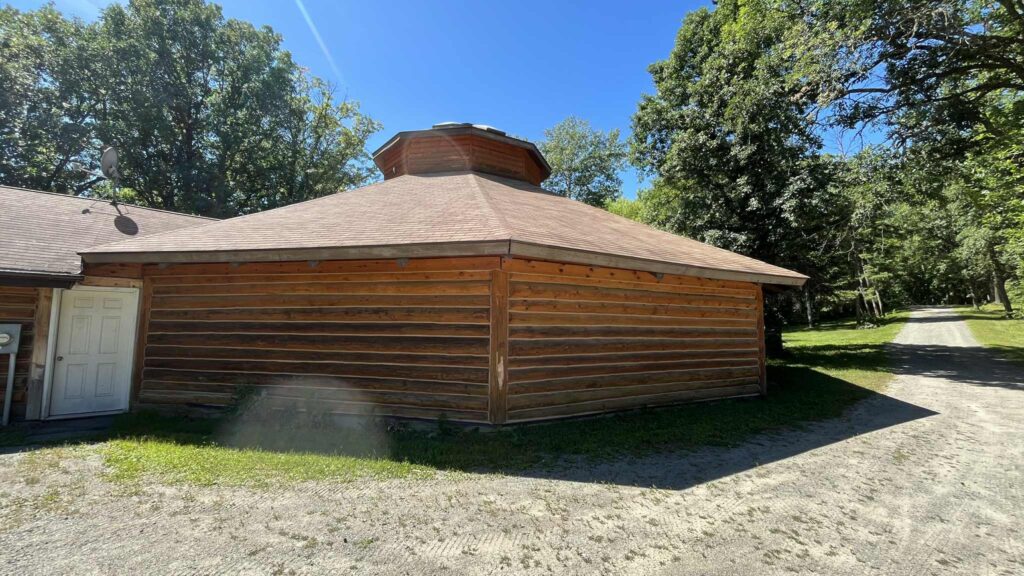
Inside, cedar poles mark the four directions, and the earthen floor in the middle circle ensures visitors remain connected to the land itself. Photographs of the community’s history line the walls, and Shy-Leigh shared stories of Elders and community members who had visions in their dreams guiding parts of the interior design. Walking inside, I felt both grounded and uplifted, as though the space held the wisdom of many voices.
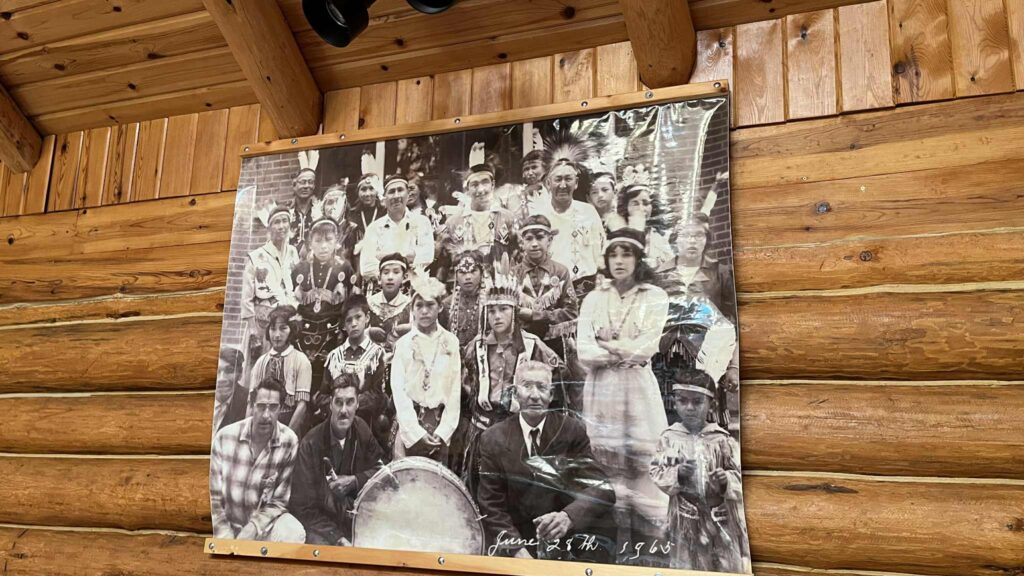
As we travelled further down the trail, we paused at several more mounds, both Blackduck and Laurel. Each carried its own history, from the artifacts found inside – pottery, pipes, ceremonial items – to the painful reality that some were desecrated by academics in the past in the name of “research”. Hearing these stories was difficult, but it was also powerful to see how the Rainy River First Nations have reclaimed stewardship, restoring dignity and respect to these sacred places.
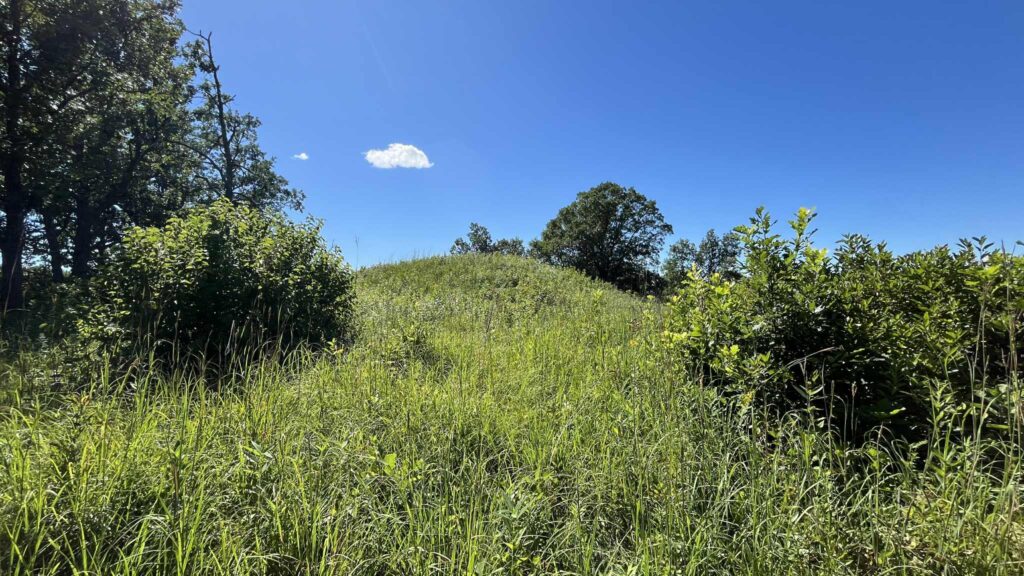
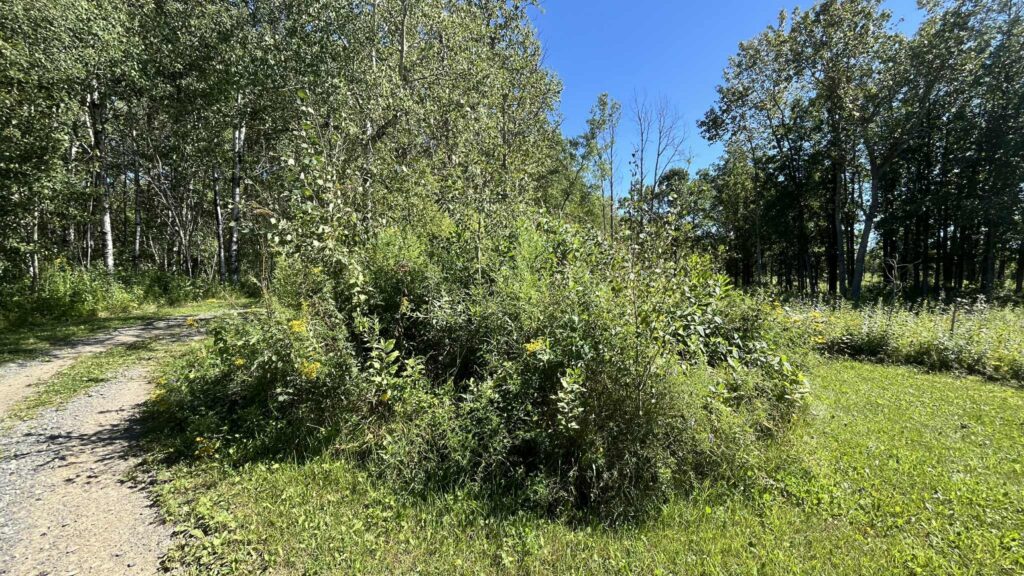
Our final stop was high on a hill overlooking the rapids of the Rainy River. The view was breathtaking: grasses swaying in the wind, the river rushing below, sunlight spilling across the landscape. Here, Shy-Leigh spoke about the cultural significance of the land, the wildlife, and the plants that grow here, many of which are still used as traditional medicines. It was the perfect place to pause and take in the enormity of everything we had seen. For me, it was a moment that tied everything together. The ancient and the present, the grief and the beauty, the land and its people.
Context & Cultural Facts For Deeper Understanding
- The Laurel Complex people built large, round burial mounds along the river’s edge; these date from about 2,300 years ago.
- The Blackduck and Selkirk cultures existed roughly 300‑800 years ago. Their pottery, artifact styles, and mound forms are distinct but show continuity and interaction with Laurel practices.
- Kay‑Nah‑Chi‑Wah‑Nung mounds are burial monuments. It is the largest burial mound site in Canada and the second largest in the world.
Why You Should Visit
You don’t have to be a historian (or archaeologist) to appreciate Kay‑Nah‑Chi‑Wah‑Nung. You might come just for the trails, to watch birds, for the beauty of the land, or a quiet moment by the river, but you’ll leave with something bigger: a deeper understanding of this land and the people who have honoured it for generations. It’s rare to find a place where education and emotion are so tightly interwoven. Here, you’ll learn, yes. But more importantly, you’ll feel.
Practical Tips for Your Trip
Where: 340 Ross Road, Stratton, Ontario
Hours: Visitor Centre operates seasonally (spring‑through‑fall), with some operations year‑round.
Tours: Guided tours are highly recommended; they make the history come alive and are more accessible for young children or for folks who can’t walk long distances.
Respectful Practices: Be aware of cultural practices, for example, tobacco offering; respecting graves or markers; listening openly; following trail etiquette.
Check the Events Calendar: Workshops, cultural programming, and special tours often take place.
Final Thoughts
Kay‑Nah‑Chi‑Wah‑Nung isn’t just a museum or a set of mounds. It’s a sacred space. It’s history and hope intertwined. It’s a place that reminds you of the roots of land, people, and the stories they hold. Walking there, learning from people like Shy‑Leigh, sharing moments with my family, standing above the rapids I left feeling both humbled and uplifted. The sorrow of what’s been lost, the scars, are real, but so is the resilience, the beauty, the commitment to care and remember.
If you ever find yourself in the Borderland, more specifically in the area of Rainy River, do not miss this place. Trust me: you’ll stand on ancient ground, and your heart will walk out changed.
For more information or to begin planning your visit to Kay-Nah-Chi-Wah-Nung Historical Centre, visit their website here: manitoumounds.com.