


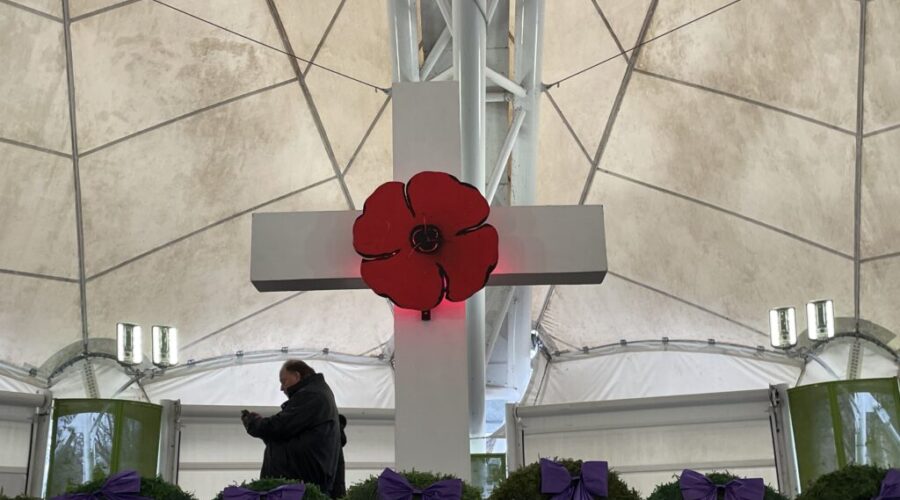
On Remembrance Day, Kenora slows to a hush. You feel it in the crisp air off the lake, in the way families step a little closer together, in the rustle of coats as neighbours gather ahead of the ceremony.
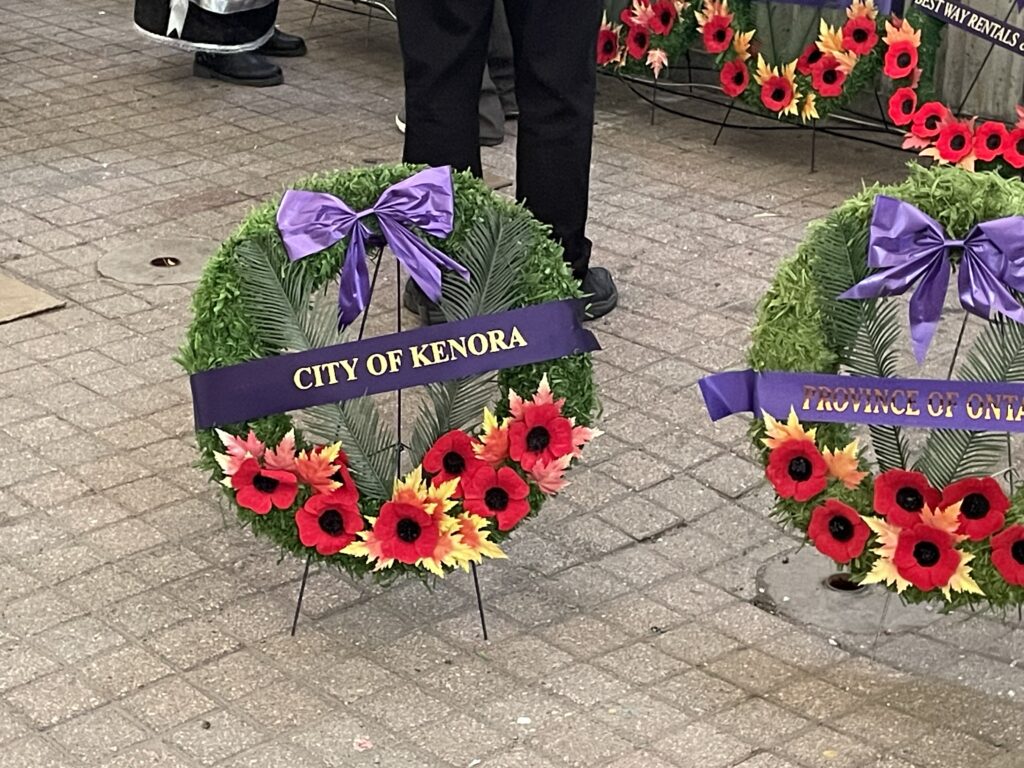
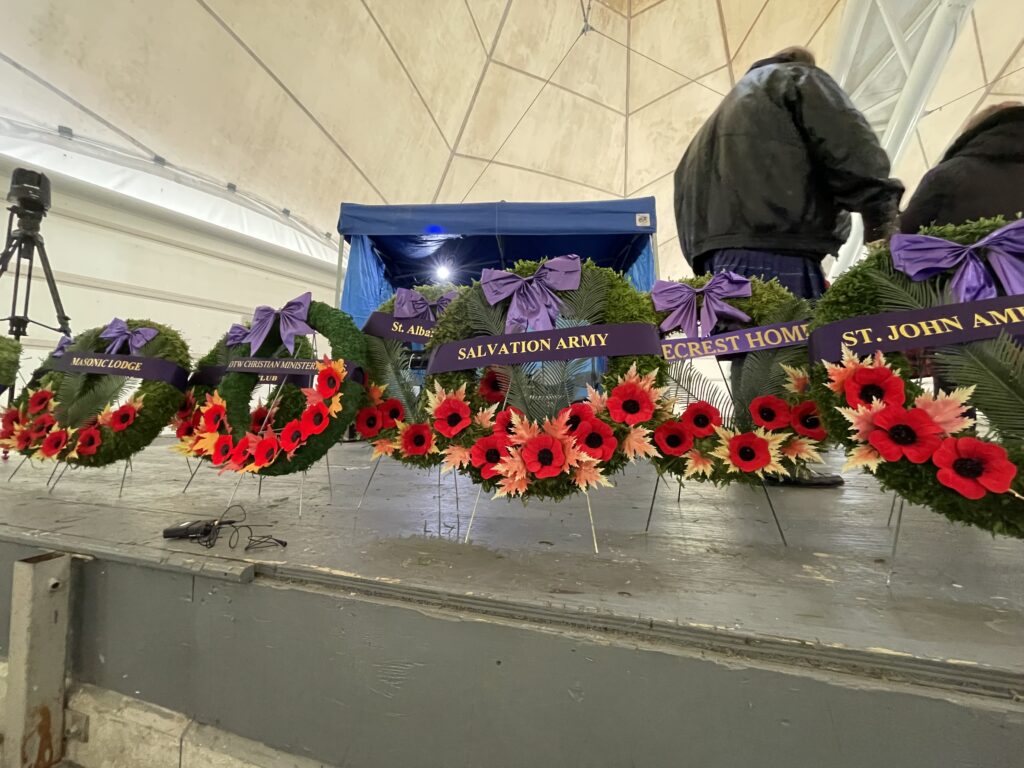
This morning, the community came together at 10:30 a.m. at the Jarnel Contracting Pavilion, laying wreaths and observing two minutes of silence. A ritual that has bound generations here in the Lake of the Woods region.
Across Canada, the 11th hour of the 11th day of the 11th month is the moment we pause and remember. The symbols are familiar—the poppy, the Last Post, the names read aloud—but in a small town like ours, they carry a particular weight.
What Remembrance Day means to Canadians
Remembrance Day began as a commemoration of the Armistice that ended the First World War in 1918. But over the decades, its meaning has deepened and expanded. Today, November 11 is a day to honour all Canadians who have served in times of war, conflict, and peacekeeping missions—from the trenches of Europe to the mountains of Afghanistan.
More than 600,000 Canadians served in the First World War, and over 66,000 never came home. Just two decades later, Canada again answered the call in the Second World War, with over one million Canadians serving and more than 45,000 losing their lives. The Korean War followed in the early 1950s, where 26,000 Canadians served under the United Nations banner, and 516 died in service.
In more recent memory, Canada’s involvement in Afghanistan from 2001 to 2014 marked the longest combat mission in our history. Over 40,000 Canadian Armed Forces members served during that conflict, and 158 lost their lives. The mission also left a lasting impact on thousands of veterans and their families, many of whom continue to navigate the physical and emotional toll of service.
Remembrance Day is about recognizing the ongoing sacrifices made by those who serve. It’s about honouring the courage of those who wear the uniform, whether in combat, peacekeeping, or humanitarian roles. It’s about acknowledging the cost of freedom and the responsibility we all share to preserve it.
Across Canada, the symbols of remembrance—the poppy, the Last Post, the two minutes of silence—remain powerful. But in each community, they take on a local texture. In Kenora, where the names on the cenotaph are familiar and the stories are close to home, remembrance is not abstract. It’s personal.
Kenora’s Legacy of Service
Kenora’s connection to military service is older than the cenotaph itself. In 1914–16, local recruits trained on the frozen bay just east of downtown and on Laurenson’s Lake.
Many joined the 94th Battalion, an infantry unit raised across Northwestern Ontario that sailed for Britain in June 1916 to reinforce the Canadian Corps at the front. Others were part of the local 98th Regiment militia, captured in archival photographs leaving from the Kenora train station to the cheers—and tears—of the town.
The Kenora Cenotaph, unveiled on September 7, 1924, stands 22 feet tall in Stanstead granite, crowned by a bronze soldier sculpted by Toronto artist Charles Adamson. Nearly 4,000 people attended the unveiling—an extraordinary turnout for a town of about 7,500 at the time. The cenotaph initially commemorated 96 local men who died in the First World War.
After the Second World War, additional names were inscribed to honour those who did not return from that conflict. The inscription on its face remains a powerful statement of civic memory and gratitude.
Kenora continues to recognize service in ways both symbolic and specific. In 2018, the renaming of the local armoury after Private David Keegic of Shoal Lake First Nation paid tribute to one of the region’s most decorated First World War soldiers and acknowledged the longstanding service of First Nations, Métis, and Inuit members of the Canadian Armed Forces.
If you want to explore these stories further, the Kenora Great War Project—an ongoing collaboration between the Lake of the Woods Museum, the Kenora Public Library, and local historians—has documented thousands of local service records and memorials, including photo galleries of plaques and cairns across our area.
It’s a remarkable resource for families and students seeking to understand the names we read every November.
Stillness, sound, and shared memory
Remembrance Day ceremonies are a choreography of sound and silence: the hush that falls over the crowd, the clear notes of the Last Post, the cadence of prayers and poems.
In Kenora, those rhythms are familiar, repeated each November as wreaths are laid by veterans, families, first responders, and local leaders. The solemnity of the moment is amplified by our setting: lake air, early winter light, and the sense that we are standing where generations have stood before.
What is striking year after year is the intergenerational presence: students, cadets, young families, and elders shoulder to shoulder. Remembrance Day becomes more than ceremony. It becomes a living conversation across ages about duty, loss, and the meaning of service.
A peaceful country, a grateful town
Remembrance Day is, first and foremost, about military service and sacrifice. While that foundation is paramount, there is also a distinctly Canadian dimension worth acknowledging: the way our country has often served as a peacekeeper.
The way we stand between opposing forces, enforcing ceasefires, and trying to prevent small conflicts from becoming catastrophic. It is an aspect of service that many Canadians, including veterans, view as integral to our national story.
From the Suez Crisis in 1956—when Lester B. Pearson proposed the first UN Emergency Force and later received the Nobel Peace Prize—to decades-long missions like Cyprus, Canadian personnel have been called to difficult postings where there wasn’t always “peace to keep.”
Veterans of these missions remind us that peacekeeping is neither simple nor symbolic. It is demanding, risky, and often underappreciated work.
For a town like Kenora, far from the front lines, the blessing is tangible: our children grow up in a country where the rituals of remembrance happen in peace. This matters more than we may realize.
Remembrance Day means our children can learn to honour courage in uniforms and recognize the courage of those who mend and tend: nurses, medics, chaplains, and the volunteers who support veterans and their families.
Remembrance Day: teaching the next generation
How do we keep Remembrance Day real for kids who know war mostly from textbooks, movies, and documentaries?
In Kenora, we do it the old-fashioned way: by showing up together, telling stories, and tying memory to place. Simple acts—like placing flags on veterans’ graves or tracing a relative’s name on a plaque—turn abstract history into something tangible and felt.
In 2018, volunteers here placed Canadian flags on the graves of 582 First and Second World War veterans at Lake of the Woods Cemetery, a small gesture that spoke volumes to students and families who took part.
Local institutions help, too. The Lake of the Woods Museum and the Kenora Great War Project give students entry points into the lives behind the names.
And every November, schools, cadet corps, and youth groups practice the rituals—silence, poppies, readings—that nurture empathy and understanding. These habits of memory are how a small town sustains a big promise: We will remember them.
A town that remembers
Remembrance Day in Kenora is rooted in humility.
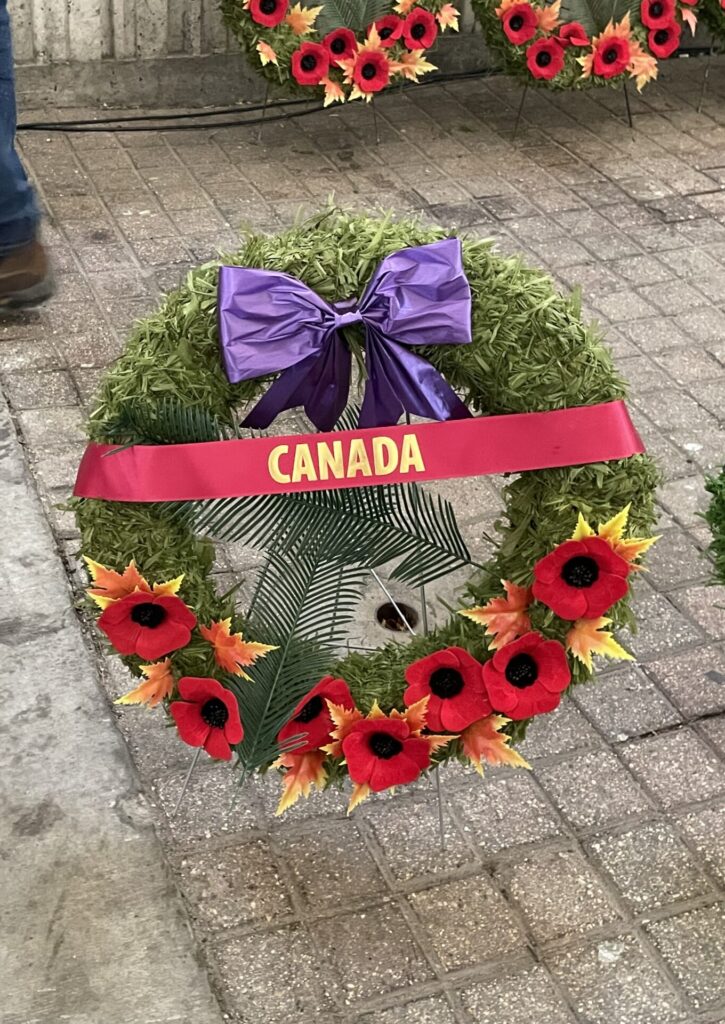
We gather, we listen, we place wreaths, and then we go about our day a little quieter, aware that our ordinary freedoms were bought at an extraordinary price.
The cenotaph does more than list names. It anchors our identity.
Every Remembrance Day, the same truths return: gratitude, sorrow, and a hope that the peace our children inherit will be durable and just.
As we stand together today, we carry forward the memory of those who served and the responsibility to live worthy of their sacrifice.
In a world where conflict still rages in too many places, it is no small thing to be a peaceful town in a peaceful country. That, too, is something to remember. And to never take for granted.